Our roots
by ENZO BIANCHI
Death is a passage, a passover, an exodus from this world to the Father: for believers it is no longer an enigma, but a mystery
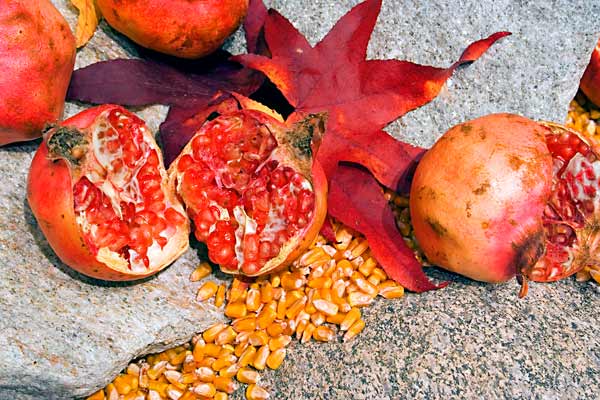
With this commemoration we are in the heart of fall: the trees lose their leaves, morning mists take longer to lift, the day grows shorter, and the light loses its intensity. And yet, there are patches on earth, the cemeteries, which appear to be spring lawns in flower, which at dusk are animated by the crackling of fireflies. Yes, because for centuries the inhabitants of our lands, once the season of fruits is over and the grain destined to be reborn in spring is sown, have wanted in the first days of November to remember the dead.
It was the Celts who placed in this period of the year the commemoration of the dead, a commemoration that the Church later christianized, making it an intensely felt anniversary with wide participation, not only in past centuries and in the countryside, but even today and even in the most anonymous cities, despite the dominant culture that tends to remove death. In accepting this commemoration, this human response to the “great question” posed to every man, the Church has projected it in the light of paschal faith, which sings of the resurrection of Christ from the dead, and for this reason wanted it to be preceded by the feast of all saints, as if to indicate that the saints draw along with them the dead, take them by the hand, to remind all of us that no one saves himself by himself. At the sunset of the feast of all saints Christians not only commemorate the dead, but go to cemeteries to visit them, as if to meet them and to show them their affection by covering their tombs with flowers in affection that in this circumstance is capable even to take the evil that could be read in the life of those dear to us and warp it in a great compassion that embraces even the shadows, one’s own and those of others.
For many of us there under the earth are our roots, father, mother, all those who have preceded us and have transmitted to us life, the Christian faith, and that cultural inheritance, that fabric of values upon which, even if with many contradictions, we try to build our own daily life.
This commemoration of the dead is for Christians a great celebration of the resurrection: what we have confessed, believed, and sung in the celebration of individual funerals is here re-proposed in one single day for all the dead. Death is no longer the ultimate reality for human beings, and those who are already dead, going towards Christ, are not rejected by him, but are resurrected for eternal life, a life forever with him, the One who is Risen and who is to come. There is this word of Christ, this promise of his in John’s Gospel that we should repeat in our hearts today, to overcome every sadness and every fear: “He who comes to me, him I will not reject!” (cf. Jn 6:37ff). The Christian is one who goes to the Son every day, even if in his life there are contradictions of sins and of failings, he is one who departs but returns, who falls but rises, who resumes with confidence the path of following. And Jesus does not reject him; on the contrary, embracing him in his love he grants him forgiveness of sins and leads him definitively to eternal life.
Death is a passage, a passover, an exodus from this world to the Father: for believers it is no longer an enigma, but a mystery, because it is inserted once and for all in the death of Christ, the Son of God, who was able to make it truly and totally an act of offering to the Father. The Christian, who by his calling dies together with Christ (cf. Rom 6:8) and with Christ is buried together in his death, by dying brings to fulfillment his obedience as a creature and is transfigured in Christ, resurrected by the energies of eternal life of the Holy Spirit.
Only in this awareness, in this vision, which derives from faith alone, does death really appear as “sister”, in order to be transfigured in an act of re-delivery to God, out of love and freely, that what he had given us: life and communion. For this reason the Church on earth, in commemorating the deceased faithful, unites itself with the Church in heaven and in one great intercession invokes mercy on those who have died and stand before God in judgment to give an account of all their works (cf. Rev 20:12). Prayer for the dead is an act of authentic intercession of love and charity for those who have reached the heavenly homeland; it is an act that we owe to those who die, because solidarity with them ought not to be interrupted, but should continue to be lived as communio sanctorum, “communion of saints”, that is, of poor men and women pardoned by God.
Enzo Bianchi
{link_prodotto:id=320}