Sanctifying time

Read more: Sanctifying time
The Christian holidays
by ENZO BIANCHI
“Be holy”, then, means “be different”, be capable of avoiding the daily idolatrous seduction, that what impeded seeing beyond, be capable of being “other”

There are seasons in which the normal succession of years becomes colored with unprecedented accents, thus causing us to rediscover the novelty that can dwell in even the most ordinary of days. [...] Even, and perhaps above all, in non-religious circles attention was given to dates, anniversaries, memories, festivities. In this, Christianity, which from its very origins rooted in that wise architecture of time that is the history of salvation already narrated in the Old Testament and celebrated in Jewish feasts, has always been careful to see the flow of time not as a cyclic succession of events and seasons, but as renewed opportunity for the irruption of the eternal in history.
In Jesus Christ, the Word of God become man, time has become a dimension present in God, the living and eternal God; time, has become totally sanctified. Now, what does “sanctifying time” mean? God, even before addressing to Israel the invitation “be holy, because I, the Lord your God, am holy” (Lv 19, 2), already “in the beginning” of his creating work, at the completion of the work of six days, “called”, made time holy by making one day, the Sabbath, an “other” day. It is written in fact, “God blessed the seventh day and made it holy” (Gn 2, 3). This, the rabbis comment, occurred to remind us that the sanctification of time is possible above all because of the Creator’s intention and that man’s sanctification begins with rendering time holy, different.


“Be holy”, then, means “be different”, be capable of avoiding the daily idolatrous seduction, that what impeded seeing beyond, be capable of being “other”, of hearing what cannot be recounted, of believing what cannot be spelled out. Consequently, “to sanctify time” means living differently, living that time according to the intention willed by God; above all, it means affirming that not only is there a day that stands at the end of time, but that the end, the goal of time is this: to live in communion with God. Time, therefore, has a precise meaning, because the seventh day is man’s destiny and the destiny of all creation: eschatological anticipation for all humanity, the seventh day is liturgy of all history, transfiguration of the entire cosmos. In God’s intention the believer’s time is a time of rhythms, a time that is different and holy: marked every week by a holy day, the Sabbath, by a holy year every week of years, the sabbatical year, by a holy year every seven weeks of years, the jubilee.
In this way God wanted to impede relegating holiness, mean’s being “other”, to an inaccessible, mythical space. This is the profound meaning of Christian feasts and, around them, of the simple flow of the liturgical year: from Advent, which transforms the memory of the Lord’s coming in the flesh into an invocation of his return in glory, to Christmastide, in which this presence of God among men becomes “epiphany”, a manifestation that culminates in the Trinitarian movement over the rivers of the river Jordan; from the forty days of Lent, in which Christians are invited to be converted to their Lord, returning to him in the simple gestures of every day, such as eating, speaking, struggling, sharing…, up to Passion week, which leads into the vigil that is the mother of all vigils, the holy Night of the Resurrection; from the forty days that follow, which lead to the Ascension, up to the fulfillment of Easter in the effusion of the Spirit on the morning of Pentecost and to the following celebration of the communion of Trinitarian love.


Around these mysteries of our salvation, illuminated by the light of the Risen Lord and awaiting the transfiguration of every creature, we meet again the Virgin Mary and John the Baptist, those who in their lives united the Old and the New Alliance, we meet Peter and Paul, apostles from Jerusalem up to the extreme ends of the earth, and all the saints, living recollections of the good news of Jesus’ Gospel.
Thus, formed to faith by these liturgical mysteries, guided by hand by this cloud of witnesses, we arrive in peace and in abandonment to the Lord’s mercy at discovering our humble roots, our not being better than our fathers, our serene returning to the earth from which we were taken and which we have so much loved. These pages wish to be only a viaticum in the long crossing of our life, scanned by the rhythm of the year’s days and months, a series of “places” in which to make a stopover to think about ourselves, the meaning of our own existence, the gift of those around us, so as to be able then to go on, full of gratitude and of trust towards the only “place” capable of slaking our thirst: the very face of God.

Enzo Bianchi
{link_prodotto:id=320}
 

A piece of earth transplanted in heaven

Read more: A piece of earth transplanted in heaven
The Christian holydays
by ENZO BIANCHI
We love this our earth, yet we feel constrained here; we are preoccupied about our bodies, yet feel that we are greater than our physical make-up

15 August, The passing of the B.V. Mary

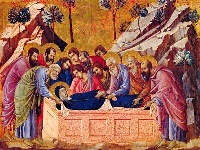
Mid-August, when summer reaches its peak and begins to decline, a period of vacation in continual balance between rest and over-exposure of the body, between relaxation and bewilderment of the spirit, between opening and confusion of the mind: and in the heart of this “time for man” in his wholeness comes what is perhaps the most popular feast among those in honor of the Virgin Mary: the Assumption. Incomprehensible paradox? Contradiction of a society that by now is branded by many as secularized? Parallel worlds that criss-cross in a holiday that is common to all as far as the day goes, but not as far as the reasons for it? I think rather of a fruitful provocation. Since the earliest centuries, in fact, the Church has perceived that in Mary – the woman who in the name of all creation had received God made man and had borne Him who rose from the dead – was prefigured not only the way, but also the end that awaits everyone living: the assumption of what is human, of everything that is human into the divine. Yes, Mary is the image and corporate personality of the faithful because she is the Daughter of Zion, the holy Israel from whom was born the Messiah, and is also the Church, the Christian community that under the cross gives birth to children for the Lord. For this reason the Visionary of the Apocalypse contemplated her as the woman robed with the sun, crowned with the twelve stars of the tribes of Israel, giving birth to the Messiah (cf. Ap 12:1-2), but also as the mother of Christ’s progeny, the Church (cf. Ap 12:17). The first creature to enter “body and soul” – that is, with all of herself – into the Creator’s space and time could thus be no other than she who had given her consent that the divine might burst upon the human: vital space given by the earth to heaven, the Virgin Mother becomes the germ and first fruit of a transfigured creation. According to the belief of the Church, Mary is now beyond death and beyond judgment, in that other dimension of existence that we are unable to call anything else than “heaven.”


In this term there is no opposition, but rather an embrace with earth: indeed, who can say, looking within and around himself or gazing at the distant horizon where earth finishes and heaven begins? Is earth only the broken-up clod and the impervious rock, or is it not also the crust that hardens our heart? And heaven: is it only the starry vault and not the living breath that abides there? Thus Mary, assumed to God, remains infinitely human, forever Mother, turned towards the earth, heedful of the sufferings of men and women of all times and places, present to their often uncertain wandering. Yes, for the Christian East as for the Christian West, in spite of different formulations, Mary’s Dormition-Assumption is a sign of the “last realities”, of what is to occur in a future not so much chronological as of “sense”, a sign of the fullness towards which our limits aspire: in her we have an intuition of the glorification that awaits the entire cosmos at the end of time, when “God will be all in all” (1 Cor 12:28) and in everything. She is the part of humanity already redeemed, figure of that “promised land” to which we are called, a piece of earth transplanted in heaven.


This “hope for all” is what the liturgy has always attempted to sing on this feast, with the language and images at its disposal. Perhaps today some liturgical expressions and some iconographic representations seem to us inadequate, but the aspiration that they endeavored to express remains the same also in our days and even in the din of the mid-August holidays. We love this our earth, yet we feel constrained here; we are preoccupied about our bodies, yet feel that we are greater than our physical make-up; we struggle for time and against time, yet perceive that our truth is greater than time; we enjoy friendship and love, yet recognize our limits and fear its transiency. Perhaps a humble woman of Nazareth, who became by God’s gift the Mother of the Lord, is just the pledge for us of this possibility “to think big” – which is a broadening of horizons and not of covetousness, greatness of spirit and not of pretensions. In that case that body transplanted towards the Light that is the source and destination of every light does not regard only the devotion of some faithful, but the final destiny of the entire creation assumed by the Uncreated; it is the flesh itself of the earth, which, transfigured, becomes eucharist, thanksgiving, embrace with heaven.

Yes, on the feast of Mary assumed into heaven Christians are invited in this period of vacations to transform into thanksgiving, eucharist, a rendering of thanks to the Creator and to the Savior the creation that they contemplate and that they ought to guard with love and care.

From:
ENZO BIANCHI
{link_prodotto:id=320}
pp. 137-139.


A promise for disfigured mankind

Read more: A promise for disfigured mankind

The Christian holidays
by ENZO BIANCHI
The Transfiguration is the sign worked by God to conform us to his Son, till he makes us like him; it is also the warrant that all our being will be transfigured


6 August, Transfiguration of the Lord

O Cristo parola di vita

{link_prodotto:id=828}
BROTHERS AND SISTERS
OF BOSE

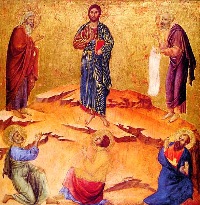
“I’ve seen a great light!”. This is what a young Japanese mother, who lived about a hundred kilometers far from Hiroshima, cried running back into home in the morning of August 6, 1945 hugging his little ten-year-old son, Kenzaburo Oe, who later got the Nobel Prize for Literature. The atomic bomb had made its tragic appearance on mankind’s horizon. A light of death and devastation. And yet Christians cannot avoid connecting that date (August 6) and that experience (“a great light”) to the feast of the Lord’s Transfiguration, which is celebrated exactly on that date since the IV century in the East and the XI century in the West.

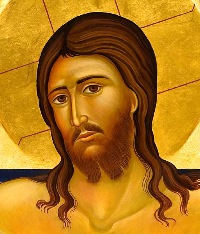
The Gospel according to Matthew describes that indescribable event with these words: “Jesus was transfigured (literally “he changed his appearance”) before Peter, James and John: his face shone like the sun and his garments became as white as light” (Matthew 17:2). In this feast, which is almost ignored or inattentively celebrated because of the elation caused by summer holidays by which many Christians are caught, Christ’s face is contemplated, a face that is radiant with a light addressed to the whole universe, to the whole mankind because it is the light of God’s life which wants to reach each creature through Christ: a light of life and communion.


And yet, since the moment when it was fixed by the monks of Palestine, the choice of the beginning of August for this commemoration has had also another coincidence which is extremely full of meaning: as a matter of fact, according to the Hebrew calendar the 9 of the month of Av falls on those very days, a day of fast and mourning during which the people of Israel commemorates the destructions of the first and the second Temple of Jerusalem (which occurred respectively in 586 BC and in 70 AD). Since then, the people of Israel also commemorates all the tragedies which marked Jewish history, such as the expulsion from Spain in 1492, till the utmost “catastrophe,” the shoah of the Nazi massacre of the last century.

Thus, born to contemplate Christ as the new Temple, not made by human hands, coinciding with the commemoration of the destruction of the Temple built by men, born to celebrate the destiny of light that awaits each man, the Transfiguration ended by having its meaning tragically enriched by the memory of a light — which blinds the hit mankind and makes the mankind that causes it ugly — and of the commemoration of the annihilation of the place and of the people chosen by God to reveal Himself. While Christians, in their churches filled with light, celebrate God’s glory which is refulgent on Christ’s face, the Jews read the book of the Lamentations in their synagogues, which are almost dark because of the dim light of only one candle. And the shadow of a gloomy and disquieting glow of death lies heavy on everybody, the bright cloud of a exterminating light. An upsetting paradox: the light of life of the Transfiguration, which comes from God and announces the future of the world in Christ, contrasts with the light of death produced by men which threatens the present of the world and compromises its tomorrow. The Transfiguration reminds us of the beauty to which mankind and the whole universe are destined, Hiroshima and the shoah witness the brutalization of which men are able; the Transfiguration evokes, assembling it in Christ, the glory to which the human body is destined, the cosmos itself, Hiroshima and the shoah reveal men’s ability to disfigure human flesh, to deform body and soul, to ravage the cosmos.


For a Christian the celebration of the Transfiguration is then also an appeal to responsibility and an exhortation to sympathy, to dilate our heart towards the suffering man. It is not a case that, according to the Gospels, the Christ who experiences the transfiguration is the one who has just announced for the first time the fate of passion and death that awaits him, the disfigurement he will suffer because of men (see Matthew 16:21-23): in front of evil, Jesus chooses to be its victim rather than being its minister. Thus, the Transfiguration becomes God’s affirmative answer to the Son who accepts the path of a thorough solidarity with the oppressed and the victims of history. The mystery contained in the heart of the Transfiguration itself is then the mystery of suffering: it finds its logic in the Easter dynamism of death-resurrection, of suffering-vivification.

Moreover, if the 9 of Av evokes the Jews’ sufferings and Hiroshima reminds us of the all men’s sufferings, Christ (who is an Hebrew and will be an Hebrew forever) is the one who gathers in his human body, in his Hebrew flesh, the whole mankind’s sufferings. And his Transfiguration becomes universal hope for each sufferer, indeed for the whole creation that groans waiting for redemption (see Romans 8:22). It is then Christians’ duty to celebrate the Transfiguration hoping for all men; as a matter of fact the memory of this event of Jesus’ life is the promise that also our body of misery and sin will be changed, so that God’s full image can be reestablished inside us. The Transfiguration is the sign worked by God to conform us to his Son, till he makes us like him. It is also the warrant that all our being will be transfigured, with no break in our human situation: also our passions, our senses, our human affections will not be destroyed but they will be transfigured through a purification whose protagonist is God. If it is experienced in this wait, the Transfiguration will be a feast that, already in the present moment, will light gleams of hope in the hearts and will enlighten consciences arousing sympathy, co-responsibility, true fraternity.

Enzo Bianchi

{link_prodotto:id=320}
pp. 131-134

A plural unity

Read more: A plural unity
Pentecost
The Church must not impose its language, but it has to enter men’s languages in order to announce the wonders of God

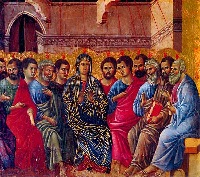
According to the fourth Gospel, on the very day of his resurrection, Jesus came among his disciples, greeted them giving them his peace and making himself known through the signs of his passion and death, which were still visible in his hands and side, “breathed on them and said: Receive the Holy Spirit.” In the Acts of the Apostles, after Jesus has ascended to the Father, while the disciples are gathered together in the same place, the Holy Spirit descends, in the form of a sound and of a strong rushing wind, as a fire showing itself in flaming tongues.

John’s and Luke’s narrations want to tell us above all that the same Spirit which was sent by the Father and which resurrected Jesus from the dead giving him a new life, was given by Jesus to his disciples: thus, Jesus and his community live of the same spirit, the holy Spirit. Pentecost is then the fullness of the Easter revelation, because the energies of the resurrected Jesus flow into his community which, thanks to the Holy Spirit, reaches faith in Jesus Christ, the son of God, and the ability to witness him and to announce him in history and to all men.


For the people of Israel, Pentecost was a feast in memory of the gift of the Law on Mount Sinai, the feast of the alliance. Now, the gift of the Spirit makes Pentecost the celebration of the new, last and definitive alliance for the community of God. Jesus didn’t leave his Church alone nor, through his ascension into heaven, there was a great separation which put an end to his work in the world. As a matter of fact, the community of the believers shares the same life and Spirit with the Lord Jesus, and this makes them qualified to continue Jesus’ work: “To announce the good news, to do the good, to heal those who are under the power of Satan.” By means of the Pentecost, Jesus’ Church was consecrated in the Holy Spirit and thus qualified for the mission, in the same way as He had been (see Acts 10:38).

Exactly for this reason the fourth gospel lays emphasis on the fact that the holy Spirit is given so that the disciples announce the remission of sins and gather the scattered sons of God, whereas the Acts witness that the risen Lord’s announcement is made in different languages by the Church, in the ways the Spirit gave the apostles the ability to express themselves (see Acts 2:3-4). After the apostles received the holy Spirit through the miracle of the tongues of fire, the words announcing the Risen Lord, the good news, are understood by Parthians, Medes and Elamites and by the various inhabitants of the several countries of the Mediterranean area. Bernard of Clairvaux wrote: “The Spirit descended upon the disciples in tongues of fire so that they could say words of fire in the languages of all peoples and could announce a fiery law by means of tongues of fire.”


The feast of Pentecost is the gathering of the scattered sons of God, an anti-Babel, the beginning of the last times, the times of the Church. In Babel there had been the confusion of the languages and the attempt to link steadily heaven and earth by building a tower which went up to the sky, but on the day of Pentecost what happens is the miracle of the languages heard and understood by everybody, and it is the Spirit to descend and to put men in touch and communion with God. It is the miracle of an understanding recovered inside a word! Yes, the variety of men’s languages will continue to exist, and this plurality of languages, cultures, history is not cancelled: as a matter of fact, the Holy Spirit creates a variegated unity, a plural unity, exactly as many gifts and limbs form together the body of the Lord, i.e. the Church. Difference must exist without cancelling unity and unity must assert itself without repressing multiplicity.

The miracle of the languages aroused by the Holy Spirit indicates to the Church the task of reconciling the unity of God’s word with the plurality of the ways in which this word has to be lived and announced in the only community of the believers and among all peoples. It is in this way that the Church must not impose its language, but it has to enter men’s languages in order to announce the wonders of God according to their different forms and ways of understanding them.


Still today, the Spirit poured forth on Pentecost binds the Church to create paths and to invent ways to make the otherness a cause of communion, not of conflict or hostility. Thus the Church, i.e. every Christian community, will be able to be the sign of the universal kingdom which will come and to which the whole mankind is called through, not in spite of, the differences going through it. All this sharpens the sensitiveness and care that Christians should have for ecumenism and the dialogue with the other religions. The awareness of the Jewish roots of the Christian faith, of the never-ending Jesus’ Jewishness, of Israel as being the people of the never revoked alliance, and at the same time the awareness of the universal destination of the Christian salvation and of the multiplicity of the peoples and cultures in which the gospel is called to throw its seeds, should be part of every mature Christian’s equipment together with the awareness that ecumenism is a constitutive element of the faith of every baptized Christian, who is called, as a Jesus’ follower, to pray and work to remove the scandalous divisions among Christians.

Translated from: 

ENZO BIANCHI
{link_prodotto:id=320}: Le feste cristiane,
Edizioni Qiqajon, 2003, pp. 103-105. 


The transcendence of the otherness

Read more: The transcendence of the otherness
Ascension
The mystery confessing Christ as next to God and present in history and inside all men teaches us the transcendence of the other: the other’s face

Jesus’ resurrection from the dead is his glorification, his exodus into the glory of God, his going to the Father who called him back from the dead in the power of the Holy Spirit. The resurrected Jesus is to be looked for where the Father is because by means of his resurrection the full divinization of his flesh and mission happened.

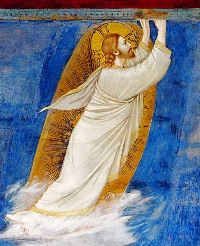
It is for this reason that neither the Gospel according to Matthew, nor the one according to John narrate Jesus’ ascension into heaven as a particular event, whereas Luke shows the ascension as the seal which puts an end to Jesus’ Easter apparitions. Forty days later — a symbolic number hinting at a concluded time, a time of wait and transition — Jesus manifested himself revealing his ascension to heaven, his new dwelling, his invisible presence in God. Is then Jesus’ ascension an abstraction, a separation from his disciples and community, or is it the revelation of a new relationship binding the resurrected Jesus to those who saw, heard and touched him (1 John 1:1) till they believed he is the Messiah, the one sent by God, the Son of God?


In truth, Jesus’ ascension into heaven, an event which cannot be narrated through our words which are able to tell only human facts, was neither a separation nor the conclusion of the story of Jesus’ life. As a matter of fact, if the narrations of the ascension are read with intelligence, it will be immediately clear that they don’t deal with a “farewell,” but rather with a sending of the disciples, a mission from Jerusalem to the ends of the earth. The disciples, gone into the whole world, will preach the Gospel to every creature (see Mark 16:15) and first of all they will make the experience of God’s nearness, of His presence; they will be aware of being just men and women at the service of Jesus’ mission, the one sent by the Father. Christ is taken up to where the Father is so that his work could be accomplished, so that he could be an intercessor for all the men among whom and with whom he dwelt as a true man on earth for about thirty seven years.


By now there is a new relationship between God and the mankind, because the separation between the earth and the sky, between the creator and the creature, became communion thanks to Jesus of Nazareth, the Son of God. “The heavens are the heavens of the Lord, but the earth he has given to men” (Psalms 115:16) sang the psalmist, but now this two realities join in Jesus Christ: as a matter of fact he descended from heaven to earth, he was in the form of God (Philippians 2:6) and he clothed himself in human and mortal flesh (John 1:14), in this human reality made up of a body, a psyche and a soul he suffered to death, he rose from the dead and he ascended to heaven in the flesh. Now “at the right hand of the Father,” i.e. in the intimacy of God’s life, there is a body of a man because in Christ heavens descended on earth and earth ascended into heaven. Jesus was really both the son of God and the son of man, able to be the Emmanuel for us, the God-with-us.


Yes, exactly the gospel according to Matthew had opened with the announcement of the coming of the Emmanuel, that is the God-with-us (see Matthew 1:22-23), of the God who comes by means of Jesus and now it ends with words which ensure that God’s presence among the men will go on: “I am with you, until the end of the age” (Matthew 28:20). Therefore the ascension is another way of catching Jesus’ victory over death because it allows us to distinguish Jesus next to the Father, and yet always among us. And by now in God there is a transfigured and glorified human body for us, a divinized human body in which death, and consequently all the evil powers, were won: “Who will bring a charge against God’s elect? — Paul the Apostle says — Who is the one who condemns? Perhaps Jesus Christ, who died, or rather rose from the dead, who sits at the right hand of God and intercedes for us?” (Romans 8:33-34).


A real presence in the physical absence, a relationship in the distance: this is the meaning of the ascension, which asks Christians to walk in the light of faith, not of sight (see 2 Corinthians 5:7), developing the sensitiveness of faith, the “spiritual senses,” i.e. the ability of the human heart to see, listen, touch, taste and smell. The mystery confessing Christ as next to God and present in history and inside all men teaches us the transcendence of the other: the other’s face, which is irreducibly his, evokes a mystery of transcendence and “beyondness” and asks for respect and communion. The ascension opposes all our greed and yearning for possession, both in the relationship with God and in the ones with the other men: this is really a great teaching of freedom.

Translated from:

ENZO BIANCHI
{link_prodotto:id=320}: Le feste cristiane,
Edizioni Qiqajon, 2003, pp. 97-99.