Warning: getimagesize(images/preghiera/vangelo/16_avvento/16_12_31_circoncisione.jpg): failed to open stream: No such file or directory in /home/monast59/public_html/plugins/content/multithumb/multithumb.php on line 1563

Warning: getimagesize(images/preghiera/vangelo/16_avvento/16_12_31_circoncisione.jpg): failed to open stream: No such file or directory in /home/monast59/public_html/plugins/content/multithumb/multithumb.php on line 1563

Warning: getimagesize(images/preghiera/vangelo/16_avvento/16_11_27_avvento_inglese.jpg): failed to open stream: No such file or directory in /home/monast59/public_html/plugins/content/multithumb/multithumb.php on line 1563

Warning: getimagesize(images/preghiera/vangelo/16_avvento/16_11_27_avvento_inglese.jpg): failed to open stream: No such file or directory in /home/monast59/public_html/plugins/content/multithumb/multithumb.php on line 1563

The Blessing on Humanity

Multithumb found errors on this page:

There was a problem loading image 'images/preghiera/vangelo/16_avvento/16_12_31_circoncisione.jpg'
Read more: The Blessing on Humanity

The Christian Holidays
by ENZO BIANCHI
The Most High made himself the Most Low, the infinite became finite, the eternal became temporal, the powerful became weak

Continue Reading

A Hope for All

Read more: A Hope for All
The Christian holidays
by ENZO BIANCHI

The beginning of a man’s life on earth: perhaps just for this extreme simplicity the message of Christmas is so universal


Christmas 

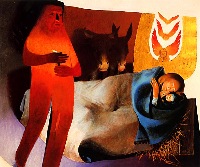
The event that Christians celebrate at Christmas is not an “apparition” of God among men, but the birth of a child that only God could give to humanity, one “born of a woman” who, however, came from God and was to be narration and explanation of God. The birth of him who is Lord and God must not be taken metaphorically, but in all its real, historic sense, which the Gospel emphasizes as “sign”. In fact, three times in the account of Jesus’ birth the evangelist Luke repeats in the same words the image that should be looked at without distraction: “a child wrapped in swaddling clothes and lying in a manger” (Lk 2:7.12.16)! yes, there is also the light that shines and wraps the shepherds around, there is the divine glory that strikes fear, there is the choir of angels that sings peace for men beloved of God, but all this is only the frame that places in relief the picture and seeks to uncover for us the meaning of what it contains.

The sign that the pastors receive from the announcement of angels is of an extreme simplicity, a poor sign, a sign belonging to poor humanity: a child is born, but in the poverty of a stable, a child is born, the child of a poor couple, child is born, to whom hospitality has been denied. This is all the sign of Christmas! And yet, the child is proclaimed Messiah: The Savior and Lord is a poor child, the son of the poor, born in poverty.

If Christians in their faith were not to maintain alive the link between the child and the Lord, between poverty and glory, they would not understand the truth of Christmas. Unfortunately, Christians are always tempted to hide the child’s naked poverty and would like his glory to be in power and in success, but the authentic image of Christmas disavows these desires of theirs.


Full of this understanding of the incarnation, a Christian hymn of the fourth century thus sings of the feast of Christmas:

“While deepest night,
dark and tranquil,
wrapped with its silence vales and hills,
the Son of God was born of a virgin
and obedient to the Father’s will
began his life as man on earth”.

The beginning of a man’s life on earth: perhaps just for this extreme simplicity the message of Christmas is so universal. It is in fact a simple message, within the reach of all, beginning with the poor shepherds of Bethlehem, yet it is the announcement of a great mystery, because that son of man who is born will pass in a very ordinary manner most of his life: he will pass among other men doing good, he will work the great miracle of refound communion with God and with others using signs and marvels connected with man’s basic needs: bread and wine multiplied, health restored, nature again reconciled with man, fraternal relations reestablished, life reaffirmed as stronger than death. For this reason the apostle Paul says that the manifestation of Christ in the world has as its scope “to teach us to live in this world” (Tt 2:11-12).


AAt Christmas Christians celebrate this mystery that has already occurred – the coming of God in the flesh of Christ – as promise and guarantee of what they still await: that God be in all humanity and that humanity be made God. But if this is the foundation of the feast, then the joy that fills it cannot be subjected to any “exclusiveness”: it is joy “for all the people”, for all of humanity as receiver of God’s love. Christians cannot take possession of Christmas by taking it away from others, they cannot imprison the hope that is the longing of everyone’s heart. If in Jesus the Creator has become creature, the Eternal has become mortal, the All-Powerful has become powerless, it is so that man could become the Son himself of God. We are confronted with that “admirabile commercium”, with that “wonderful exchange”, by which the fathers of the first centuries sought to explain to their contemporaries the event that had not so much changed the course of history as it had rather restored to history its sense. This is the shining hope that Christians ought still today announce to the men and women among whom they live, so thirsting for meaning, so desirous of hope, so possessed by an expectation greater than their own heart. For Christians it is a matter of going, of staying in the midst of others with the same joy with which God came among us in the Son, the Emmanuel, the God-with-us, who cannot and should not ever become the God-against-the-others. Then Christmas – not only the Christian one, but also that “of all”. even that contagious climate of goodness that overcomes the hypocrisy of a foolish do-goodiness – will not end burned up in consuming many goods in a few hours, will not go out with the last light, will not know the depreciation of the end of season sale, but will expand, multiplying itself in daily living: it will be the pledge of a more human life, containing authentic relations and respect for the other, a life rich in meaning, capable of expressing in acts and words beauty and light, echoes of that light which shone in the deep night of Bethlehem and which ought to shine also today in every place enveloped by the darkness of pain and of non-sense. Christians know by faith that God wanted to commit himself radically to humanity in becoming man, they know that he entered history to direct it definitively towards the exit of salvation, they know that he assumed the weakness of men exposed to the offenses of evil just in order to overcome evil and death. And they are called to witness this “knowledge” of theirs in a daily taking up of poverty, of abasement to meet the other, in the consciousness that what unites men is greater than what makes them different against each other.

Yes, if at Christmas Christians are in joy, this is not a privilege reserved to them, a gift the sharing of which would frustrate it: on the contrary, it is not permitted to them to take exclusive possession of it because they cannot withdraw Christ from the humanity to which he was sent by the Father. Christmas is an invitation to hope, and this hope is offered to all.

Enzo Bianchi
{link_prodotto:id=320}

Entering Advent

Multithumb found errors on this page:

There was a problem loading image 'images/preghiera/vangelo/16_avvento/16_11_27_avvento_inglese.jpg'
Read more: Entering Advent

by ENZO BIANCHI
Truly, Advent brings us to the heart of the Christian mystery: the coming of the Lord at the end of time. The Christian is he who remains vigilant every day and every hour, in the knowledge that the Lord is coming

Continue Reading

Our roots

Read more: Our roots
The Christian holidays
by ENZO BIANCHI
Death is a passage, a passover, an exodus from this world to the Father: for believers it is no longer an enigma, but a mystery

With this commemoration we are in the heart of fall: the trees lose their leaves, morning mists take longer to lift, the day grows shorter, and the light loses its intensity. And yet, there are patches on earth, the cemeteries, which appear to be spring lawns in flower, which at dusk are animated by the crackling of fireflies. Yes, because for centuries the inhabitants of our lands, once the season of fruits is over and the grain destined to be reborn in spring is sown, have wanted in the first days of November to remember the dead.

It was the Celts who placed in this period of the year the commemoration of the dead, a commemoration that the Church later christianized, making it an intensely felt anniversary with wide participation, not only in past centuries and in the countryside, but even today and even in the most anonymous cities, despite the dominant culture that tends to remove death. In accepting this commemoration, this human response to the “great question” posed to every man, the Church has projected it in the light of paschal faith, which sings of the resurrection of Christ from the dead, and for this reason wanted it to be preceded by the feast of all saints, as if to indicate that the saints draw along with them the dead, take them by the hand, to remind all of us that no one saves himself by himself. At the sunset of the feast of all saints Christians not only commemorate the dead, but go to cemeteries to visit them, as if to meet them and to show them their affection by covering their tombs with flowers in affection that in this circumstance is capable even to take the evil that could be read in the life of those dear to us and warp it in a great compassion that embraces even the shadows, one’s own and those of others.


For many of us there under the earth are our roots, father, mother, all those who have preceded us and have transmitted to us life, the Christian faith, and that cultural inheritance, that fabric of values upon which, even if with many contradictions, we try to build our own daily life.

This commemoration of the dead is for Christians a great celebration of the resurrection: what we have confessed, believed, and sung in the celebration of individual funerals is here re-proposed in one single day for all the dead. Death is no longer the ultimate reality for human beings, and those who are already dead, going towards Christ, are not rejected by him, but are resurrected for eternal life, a life forever with him, the One who is Risen and who is to come. There is this word of Christ, this promise of his in John’s Gospel that we should repeat in our hearts today, to overcome every sadness and every fear: “He who comes to me, him I will not reject!” (cf. Jn 6:37ff). The Christian is one who goes to the Son every day, even if in his life there are contradictions of sins and of failings, he is one who departs but returns, who falls but rises, who resumes with confidence the path of following. And Jesus does not reject him; on the contrary, embracing him in his love he grants him forgiveness of sins and leads him definitively to eternal life.


Death is a passage, a passover, an exodus from this world to the Father: for believers it is no longer an enigma, but a mystery, because it is inserted once and for all in the death of Christ, the Son of God, who was able to make it truly and totally an act of offering to the Father. The Christian, who by his calling dies together with Christ (cf. Rom 6:8) and with Christ is buried together in his death, by dying brings to fulfillment his obedience as a creature and is transfigured in Christ, resurrected by the energies of eternal life of the Holy Spirit.

Only in this awareness, in this vision, which derives from faith alone, does death really appear as “sister”, in order to be transfigured in an act of re-delivery to God, out of love and freely, that what he had given us: life and communion. For this reason the Church on earth, in commemorating the deceased faithful, unites itself with the Church in heaven and in one great intercession invokes mercy on those who have died and stand before God in judgment to give an account of all their works (cf. Rev 20:12). Prayer for the dead is an act of authentic intercession of love and charity for those who have reached the heavenly homeland; it is an act that we owe to those who die, because solidarity with them ought not to be interrupted, but should continue to be lived as communio sanctorum, “communion of saints”, that is, of poor men and women pardoned by God.

Enzo Bianchi

{link_prodotto:id=320}

The fruits of love

Read more: The fruits of love
The Christian holidays
by ENZO BIANCHI
The feast of all saints is truly a memorial of the Church’s glorious autumn, the feast against solitude, against every isolation

November 1, feast of all saints

In the last few decades very many saints and blessed have been proclaimed; there has never been a time in the Church with so many canonizations, which have become a sign also of an extended “catholicity” of Christian witness. In spite of this, many persons inside the Church or interested in the Church feel that they do not know the saints as close to them, are unable to discern “God’s friend” — this is the marvelous patristic definition of a saint — in a next-door neighbor, in the Christian of everyday life. Perhaps this is so because we live in a culture that sets a premium on appearances, a world in which, as someone has said, “even holiness is measured in inches”: in that case many seek not the Lord’s disciple, but the successful ecclesiastic, the person able to attract crowds, the opinion leader with the current jargon of sociology, politics, economics, ethics on his lips, the media star sought for a cheap word on every kind of event, which makes him appear as the most eloquent, whether or not these follow the Lord.


In this ambiguous search for sanctity around us, the feast of all saints, the celebration of the communion of saints in heaven and on earth comes to our aid. In the heart of autumn, after the reaping, the harvest of the fields and of the vineyards in our countryside, the Church asks us to contemplate the reaping of all the living sacrifices offered to God, the harvest to God of all the ripe fruits brought about by God’s love and grace among men. The feast of all saints is truly a memorial of the Church’s glorious autumn, the feast against solitude, against every isolation that afflicts the human heart: if there were no saints, if we did not believe “in the communion of saints” — which not by chance is part of our profession of faith — we would be shut up in a desperate and despairing solitude. On this day we ought to sing: “We are not alone, we are a living communion!” We ought to renew the Easter canticle, because, if at Easter we contemplated Christ living forever on the Father’s right hand, today, thanks to the energies of the resurrection, we contemplate those who are with Christ on the Father’s right hand: the saints. At Easter we sang that the vine was living, risen; today the Church invites us to sing that the branches, cleansed and pruned by the Father on the vine that is Christ, have given their fruit, have produced an abundant vintage and that these clusters, gathered and pressed together form a single wine, the wine of the Kingdom.


Today we contemplate this mystery: those who have died for Christ, with Christ, and in Christ are alive with him and, because we are members of Christ’s body and they are glorious members of the Lord’s glorious body, we are in communion with each other, the pilgrim Church with the heavenly Church, and together form the one and complete body of the Lord. Today the scent of incense rises from our assemblies, a sign of our bonds with the Church above, the heavenly Jerusalem, which awaits the completion of the number of its children and which is living, glorious in God’s presence with Christ forever.

This is the powerful call that sounds for us today: to rediscover th saint at our side, to feel a part of the same body. Consciousness of this presence has nourished the faith and the way of holiness of many believers, from the first centuries on to our own days: men and women who were hidden, but able to live daily the conscious resistance to ever new idolatries, in a patient submission to God’s will, with a wise love for every human being, image of the invisible God.


The saint then becomes an efficacious presence for the Christian and for the Church: “We are not alone, but wrapped in a great cloud of witnesses” (Heb 12:1), with them we form the body of Christ, with them we are God’s children, with them we will be one with the Son. In Christ such an intimacy is established between us and the saints that it exceeds the intimacy of our relations, even the most fraternal, here on earth: they pray for us, intercede for us, are close to us as friends who never fail. Their closeness is really capable of marvels, because by now their will is assimilated to the will of God manifested in Christ, their and our sole Lord: no longer do they live, but Christ lives in them, since they have reached the fulfillment of every Christian calling, the assumption of Christ’s own will. “Not mine, but your will be done, Father” (Lk 22:42). Supported by all those who have preceded us on this journey, we will discover also the saints who are still active on earth, because the seed of saints is not about to become extinct: fallen on earth, it is still ready to give fruit today. “Behold, I make a new thing: it sprouts just now, are you not aware of it?” (Isa 43:19).

Enzo Bianchi

{link_prodotto:id=320}